Artroflex
Daily capsules for adults with stiff, aching joints who want cartilage building blocks and plant extracts in one course.
- Glucosamine, chondroitin and marine collagen
- Boswellia and ginger in the same capsule
- €49 a pack, ordered by phone
Stiff knees on the stairs, a hip that aches after a walk. Glucosamine, chondroitin, collagen and plant extracts each do a different job. Our catalogue carries one joint supplement: Artroflex Active capsules, at €49 a pack.
One product for now: Artroflex Active capsules, taken daily as a course.

Daily capsules for adults with stiff, aching joints who want cartilage building blocks and plant extracts in one course.
Joint supplements work as a course of daily use over weeks. In the large GAIT trial, people with moderate-to-severe knee pain did better on glucosamine plus chondroitin than on placebo, and a Cochrane review found that chondroitin eases osteoarthritis pain. Judge any supplement after 8–12 weeks of daily use, not after a few days.
A joint supplement is a course rather than a painkiller, and it works best on top of exercise and weight control.

Glucosamine and chondroitin are building blocks of cartilage itself. Collagen, MSM and hyaluronic acid round out most joint formulas, and each has its own job.
Glucosamine is a raw material for the matrix of cartilage, the smooth layer that covers the ends of bones. Most glucosamine in supplements is made from shellfish shells. In a 3-year trial of 202 people with knee osteoarthritis, glucosamine sulphate slowed the narrowing of the joint space compared with placebo.
Chondroitin holds water inside cartilage, which lets it cushion load. A 2019 review of trials found a small to moderate effect on knee pain, with higher daily amounts doing better than lower ones.
Collagen peptides are absorbed after digestion and are thought to supply material for the collagen in cartilage. Marine collagen comes from fish; bovine and chicken collagen are also sold. A review of collagen hydrolysate trials reported less knee and hip pain.
MSM (methylsulphonylmethane) provides organic sulphur. In a 12-week pilot trial of 50 people with knee osteoarthritis, MSM improved pain and physical function.
Hyaluronic acid is a natural component of synovial fluid, the lubricant inside every joint. Cartilage cells use glucosamine to make it.
Turmeric, boswellia and ginger are the plant extracts joint supplements use against inflammation. Curcumin, the active compound in turmeric, blocks the NF-κB and COX-2 pathways of inflammation in laboratory studies. On its own, curcumin is poorly absorbed. Piperine from black pepper raised its blood levels in a 1998 human study, which is why the two are paired.
Boswellic acids from the resin of Boswellia serrata inhibit 5-lipoxygenase, an enzyme that drives inflammation. In a 90-day trial of 75 people with knee osteoarthritis, a boswellia extract taken by mouth improved pain and function. Devil's claw root, another plant in joint formulas, is recognised by the European Medicines Agency for traditional use in mild joint pain.
Ginger extract reduced knee pain on standing in a trial of 261 patients: 63% improved on ginger against 50% on placebo. Each of these extracts has an anti-inflammatory action, and a formula that combines two or three of them covers more than one pathway.
Vitamin C is the one vitamin with an EU-authorised claim tied to cartilage: it contributes to normal collagen formation for the normal function of cartilage (Regulation (EU) No 432/2012). Collagen gives cartilage its strength, and the enzymes that build it need vitamin C.
Vitamin D and calcium work on bone rather than cartilage. They keep bones mineralised, and magnesium contributes to normal bones and normal muscle function. Omega-3 fatty acids come mainly from oily fish such as salmon, mackerel and sardines.
Capsules and tablets work through the whole body after digestion; creams, gels and patches act where they are applied. That difference decides how fast you feel anything and how many joints it reaches.
| Option | How it works | How fast | Who it suits | Status |
|---|---|---|---|---|
| Joint supplement capsules, such as Artroflex Active | Ingredients absorbed after digestion reach every joint | Over weeks of daily use | Stiffness in several joints; people who prefer nothing on the skin | Food supplement |
| Menthol or capsaicin cream or gel | Menthol cools the skin, capsaicin warms it; both act where rubbed in | Within minutes | One sore knee, shoulder or hand | Cosmetic or licensed medicine, depending on the product |
| Ibuprofen or diclofenac gel | An anti-inflammatory medicine absorbed through the skin at the painful spot | Within hours | Short flare-ups in one joint | Medicine, with its own leaflet and warnings |
| Painkiller tablets such as paracetamol or ibuprofen | Act through the whole body on pain or inflammation | Within about an hour | Short courses during a flare | Medicine; follow the leaflet's daily limit |
| Heat or cold patch | Releases warmth, cold or an active ingredient over several hours | Within minutes | Stiffness (heat) or a fresh flare (cold) | Depends on the product |
Capsules and a cream do not rule each other out: one works through the body over weeks, the other on one joint within minutes.
Most joint pain comes from osteoarthritis, overuse or excess weight. Osteoarthritis is wear of the cartilage that covers the ends of bones. It builds over years and shows up as stiffness after rest and aching after activity, most often in the knees, hips and hands.
Rheumatoid arthritis works differently: it is an autoimmune inflammation of the joint lining, with swelling, warmth and long morning stiffness, often in the same joints on both sides of the body. Gout is caused by uric acid crystals in a joint, classically the big toe, and flares within hours.
Excess weight increases the load on knees and hips with every step. Overuse at work or in sport strains the muscles, tendons and ligaments around a joint, so the pain can come from soft tissue rather than from the joint itself.
See a GP rather than reaching for a supplement if any of these apply, and go to an emergency department if a joint cannot take your weight after a fall.
Regular low-impact exercise is the first thing to get right for sore joints, and a supplement works best on top of it. Walking, swimming and cycling keep joints moving and the muscles around them strong. Strong thigh muscles take load off the knee.
Losing excess weight reduces the load on knees and hips with every step. Physiotherapy strengthens the specific muscles that protect a joint and teaches you to move without setting off a flare.
Cold packs calm a fresh flare: wrap ice in a cloth and hold it on the joint for up to 20 minutes. Warmth eases stiffness, and massage relaxes tight muscles around a joint.
A joint supplement label should answer five questions before you pay.
Check these four situations before starting a joint supplement.
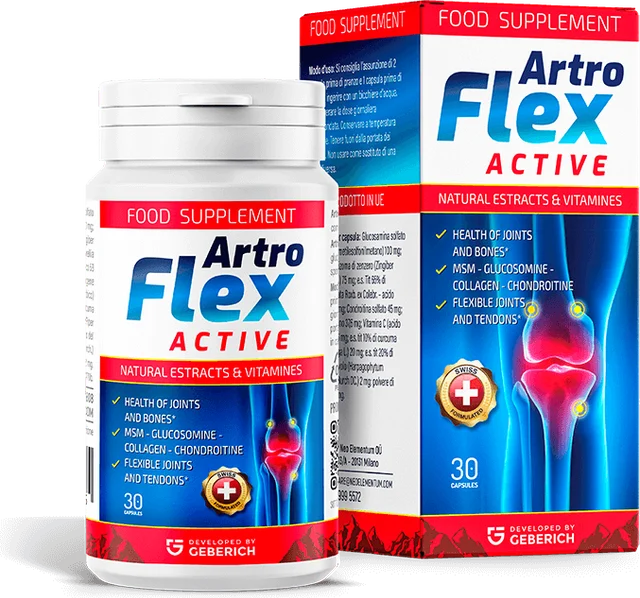
Artroflex Active is a food supplement in capsules that combines cartilage building blocks with anti-inflammatory plant extracts. Its core is glucosamine, chondroitin and marine collagen, together with boswellia and ginger. A pack costs €49.
Artroflex Active works on two fronts at once: the building blocks supply material for cartilage, while the plant extracts act on inflammation. The capsules are taken daily as a course, which suits people with stiffness in more than one joint.
The Artroflex Active guide covers the full ingredient list, the dose, the timeline and who should avoid it.
Ordering takes a name and an Irish phone number; an operator does the rest on a short call.
Enter your name and phone number in the order form. No card details are asked for online.
An operator from the official distributor for Ireland calls you back to confirm the product, the number of packs and your delivery address.
On the same call the operator confirms the delivery time, the total at €49 a pack and the payment details.
The courier brings the parcel to the address you confirmed on the phone.
The ingredients with the most trial data are glucosamine sulphate, chondroitin and boswellia, and a formula that combines cartilage building blocks with anti-inflammatory plant extracts covers two mechanisms at once. Judge whichever supplement you choose after 8–12 weeks of daily use.
Keep moving: daily walking, swimming or cycling and exercises for the thigh and hip muscles take load off sore joints. Losing excess weight reduces pressure on knees and hips. Warmth eases stiffness, a cold pack calms a fresh flare, and a joint supplement taken as a course adds cartilage building blocks over the following weeks.
A warm bath or shower in the morning loosens stiff joints, and gentle movement straight afterwards keeps them loose. A heat pad eases stiffness during the day, while an ice pack wrapped in a cloth, held for up to 20 minutes, calms a swollen flare. Massage relaxes the muscles around a joint, and short walks break up long spells of sitting.
For fast relief, paracetamol, ibuprofen tablets and anti-inflammatory gels act within an hour or so, and menthol or capsaicin creams within minutes where you rub them in. These suit flare-ups and short courses. A joint supplement works on a different timescale, with daily use over 8–12 weeks, so it complements fast relief rather than replacing it.
Joint aches are a common symptom around the menopause, as oestrogen levels fall. Vitamin D and calcium support bone, which matters more after the menopause, and vitamin C contributes to normal collagen formation for the normal function of cartilage. Glucosamine and collagen supplements are taken for the same aches at any age; judge them after 8–12 weeks of daily use.
Reviews tell you about delivery, packaging and how individual people felt, not whether the ingredients work. Treat star ratings without visible reviews, identical wording across several sites and improvement percentages without a named study as marketing. Trial data on the ingredients, a full ingredient list and a price confirmed before anything is sent are firmer ground.