Capsicum
Extract of hot pepper and the source of capsaicin, which gives Artifix its warmth and tingle.
 ergofisio Order now
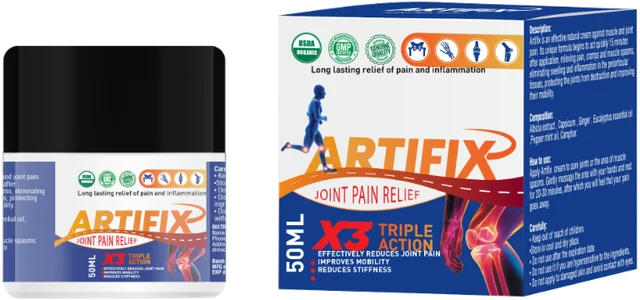
Artifix is a joint cream you rub into the skin over a sore knee, back or shoulder. Capsicum brings warmth, while peppermint oil, eucalyptus oil and camphor bring a cool sting in the same thin layer. A 50 ml jar costs USh 169,000, and you pay the courier on delivery.
Artifix is a 50 ml cream for adults with aching knees, a stiff back, sore shoulders or a muscle in spasm. It pairs capsicum, which warms the skin, with peppermint oil, eucalyptus oil and camphor, which cool it. You rub Artifix into the skin over the painful spot two or three times a day, and it acts where you put it.
Artifix suits people who would rather rub a cream into one or two sore places than swallow tablets every day. You can put it on the knee after a day in the garden, on the lower back before bed, or on a shoulder that has stiffened up. Artifix is meant for joints and for muscles in spasm, so the same jar serves the knee, the back and the shoulder.
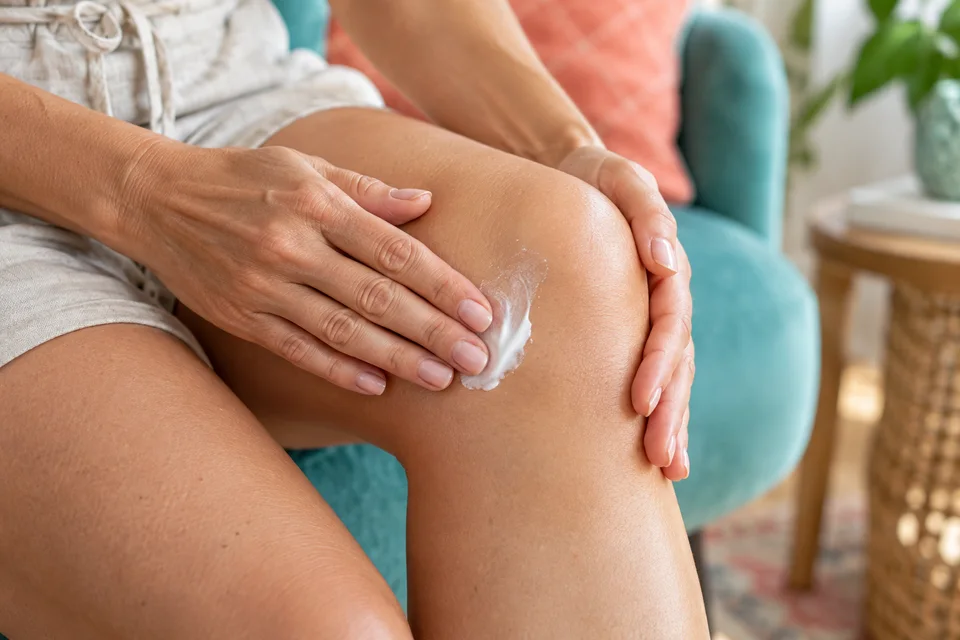
Artifix works on the skin and the nerve endings under it, at the spot where you rub it in. Capsicum gives warmth, and peppermint oil, eucalyptus oil and camphor give cold, so one layer of Artifix sends the nerves two strong signals at once. Heat and cold on the skin distract the nerves from the ache underneath.
Capsaicin, the hot compound in capsicum, switches on the TRPV1 receptors that sense heat, so the skin over the joint feels warm and tingles. With repeated use those nerve endings grow less sensitive. Capsaicin creams have been tested in people with knee osteoarthritis, and pooled studies recorded a small drop in pain.
These three give Artifix its cold sting and sharp smell. Peppermint oil and eucalyptus oil have a long record of being rubbed on the skin for local muscle pain, and the European Medicines Agency lists that traditional use in its herbal monographs.
Rubbing Artifix in warms the area on its own. The directions then call for 20 to 30 minutes of rest, so the joint stays still while the cream is on the skin.
Artifix contains six active ingredients: albizia extract, capsicum, ginger, eucalyptus essential oil, peppermint oil and camphor. Capsicum warms the skin and three of the others cool it, which gives Artifix its hot-and-cold feel.
Extract of hot pepper and the source of capsaicin, which gives Artifix its warmth and tingle.
The same root that goes into ginger tea. Most research on ginger looks at taking it by mouth; in Artifix it sits alongside capsicum.
Its menthol brings the fresh, cold feeling on the skin.
Gives Artifix its sharp smell and deepens the cool feeling.
Camphor starts with a cold sting that turns to warmth. It is the strongest-smelling part of the formula.
Albizia is a tree. Its extract is the least studied part of the formula: so far it has been tested only in the laboratory, not on human joints.
Artifix goes on in a thin layer two or three times a day, and the minimum course is one and a half months. Each application takes a few minutes of rubbing and then 20 to 30 minutes of rest.
Apply Artifix to clean, dry, unbroken skin over the painful joint or the muscle in spasm.
Take a small amount from the jar with your fingers and spread it thinly over the sore area.
Rub gently until the cream has soaked into the skin. Then rest the joint for 20 to 30 minutes.
Wash your hands with soap straight after. Capsicum and camphor sting badly in the eyes, nose and mouth.
Repeat two or three times a day, every day. Plan the whole course of at least one and a half months before you order, so you do not run out halfway.
Leave your name and mobile number. The operator calls to confirm the number of jars, your address and the delivery charge, and you pay USh 169,000 a jar to the courier when the parcel arrives.
Artifix costs USh 169,000 for a 50 ml jar. You order it here: send your name and mobile number, take the call, and pay the courier when the jar is in your hands.
The Artifix order is settled on the phone. The operator names the total, the delivery charge to your area and how the courier takes payment, and nothing is sent until you agree. Nothing is paid in advance, and nobody on the call asks for a PIN or a mobile money transfer.
Artifix also turns up in online classified ads from private sellers. Those jars come from outside the distributor, so the price and the contents are the seller's word only. Ordered here, Artifix reaches you with the operator's confirmation and is paid for only once you have checked it.
Artifix joint cream is a 50 ml cream for the skin, packed in a jar inside a blue box with an orange logo, with all the text in English. The name also belongs to Artifix 80/480 mg, antimalarial tablets made in India that contain artemether and lumefantrine, and to Artifix GM, another Indian tablet. Those tablets and the cream share only the name.
Artifix cream is for rubbing on the skin over a joint. It is never swallowed and plays no part in treating malaria. If you were given Artifix tablets for malaria, finish them exactly as prescribed. When you order on the phone, say "Artifix joint cream" so nobody confuses it with the malaria tablets.
Artifix is judged first by what you feel on the skin: warmth from capsicum and a cool sting from peppermint and camphor soon after you rub it in. How the joint feels on the stairs and in the morning is judged over weeks of regular use, which is why the Artifix course runs at least one and a half months. A fair review names the joint, how often the person applied the cream and for how many weeks.
Reviews that promise new cartilage, a cure for arthritis or pain gone for good are advertising, whoever signs them. The same goes for pages with a made-up expert in a white coat, a crossed-out price or a countdown clock.
The National Drug Authority has issued no warning about Artifix, and a search for complaints and fact-checks on 25 September 2026 found none. Artifix is a real product: the brand's own photos show the same blue box and jar that arrive at your door. Payment on delivery means you see the jar before you pay a shilling.
Artifix warms and stings because of capsicum and camphor, and those same ingredients set its limits. Check these points before the first application.
Artifix joint cream has nothing to do with malaria. It is a 50 ml cream with capsicum, peppermint oil and camphor that you rub on the skin over a sore joint. The malaria tablets sold under the same name, Artifix 80/480 mg with artemether and lumefantrine, are a different medicine made in India. Never swallow the cream, and never use it in place of malaria treatment.
Artifix is a cream in a 50 ml jar, packed in a blue box. Some adverts call it a gel, but what the courier brings is the cream. It spreads in a thin layer, soaks into the skin with a few minutes of massage, and leaves a warm and cool feeling with a strong smell of peppermint and camphor.
Artifix goes on two or three times a day in a thin layer, rubbed in until absorbed, followed by 20 to 30 minutes of rest. The minimum course is one and a half months of daily use. Plan the number of jars with the operator on the call so the course runs without a break.
The warmth and tingle come from capsaicin, the hot compound in capsicum, and camphor adds its own sting. Both are expected, and with regular use the skin gets used to the heat. Burning that is painful is a sign to wash the cream off with soap and water and use a thinner layer next time.
Artifix is meant for painful joints and for muscles in spasm, so the knees, the lower back, the shoulders and the hands all suit it. Spread a thin layer on each spot and massage it in. Keep it away from the face, from broken skin and from any area under a tight bandage.
Fill in the form with your name and a Ugandan mobile number. The operator calls to confirm the number of jars, your address and the delivery charge. Artifix costs USh 169,000 a jar, and you pay the courier on delivery, after you have checked the parcel. Nothing is charged when you send the form.
Artifix is used two or three times a day for at least one and a half months. Leave your name and number: the operator helps you work out how many jars at USh 169,000 each your joints need for the course, and you pay on delivery.